
What Is a Channel Manager? — The Complete Guide for Hotel Owners
If you run a hotel and work with more than 2–3 OTAs, you've almost certainly either had an overbooking disaster or spent late nights manually updating extranets. A channel manager fixes both problems — permanently. This guide explains what a channel manager actually does, how it works under the hood, and how to pick the right one for your hotel.
What a Channel Manager Actually Does
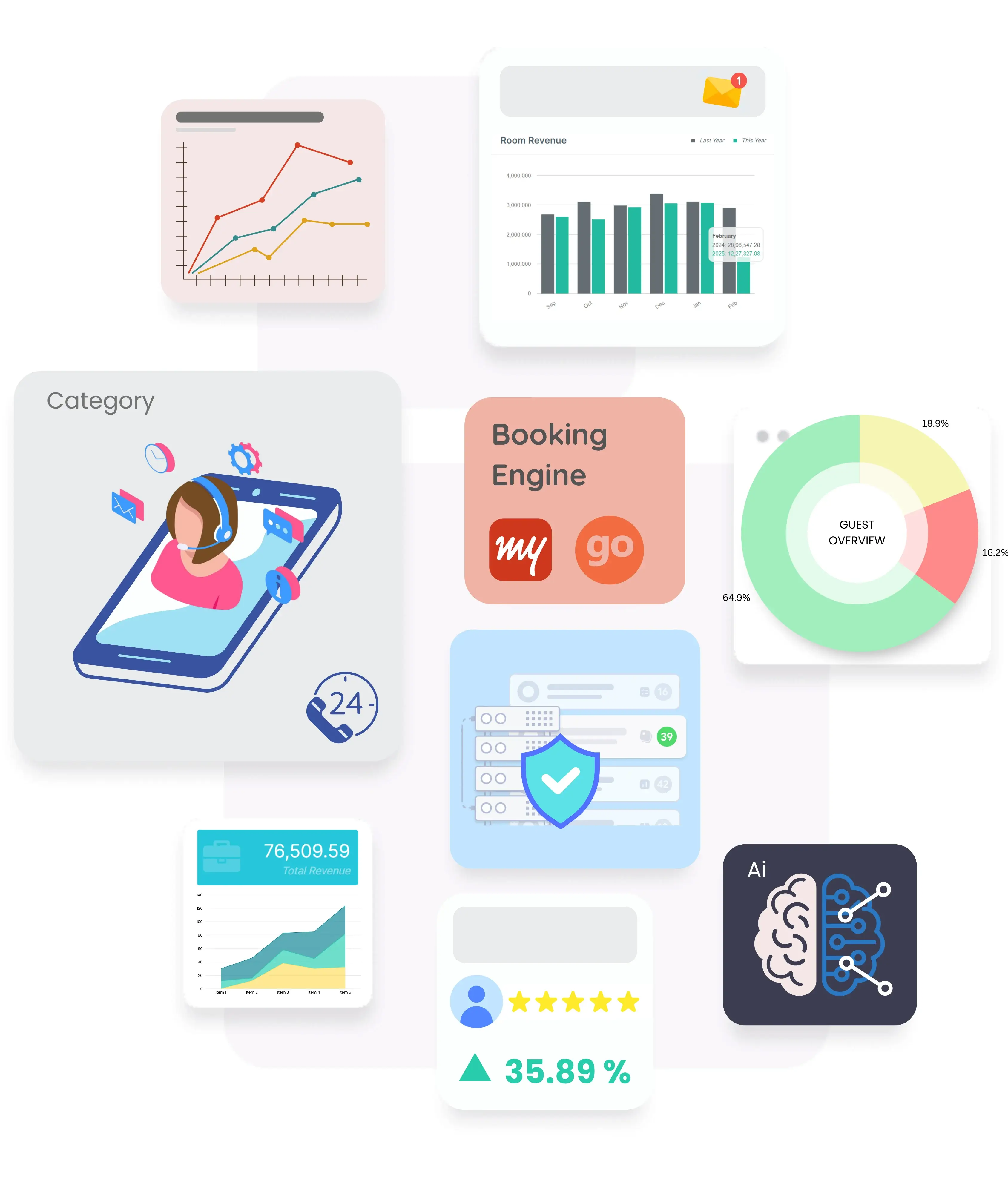
A channel manager is a software layer that connects your PMS to every OTA you sell on (Booking.com, MakeMyTrip, Expedia, Goibibo, Agoda, others). It keeps rates, inventory, and stop-sell rules synchronized in real time across all channels — so when a guest books on any platform, every other platform instantly knows that room is gone.
Most modern channel managers use pooled inventory — your hotel's total available rooms sit in one bucket that all OTAs pull from. As bookings come in, the bucket decreases across all channels simultaneously. No allocation math, no OTA-specific inventory limits.
See our channel manager for hotels in India for the full architecture and OTA list.
Six Problems a Channel Manager Solves
These are the operational pain points every hotel without a channel manager experiences.

Overbookings from Manual Updates
Without automation, miss an OTA update for 30 minutes and two channels could sell the same last room. Result: angry guest, bad review, refund. Channel manager eliminates this entirely.

Rate Disparities
If your room is ₹4,500 on Booking.com but ₹4,200 on Goibibo because you forgot to update one, OTAs penalize you with reduced visibility. Channel manager pushes a single rate to all channels.
Time Sink
A 50-room hotel on 8 OTAs without channel manager spends 12–20 hours/week on rate and inventory updates. That's a full-time job lost to admin work.

Two-Way Sync
Bookings flow back from OTAs into your PMS automatically. No manual entry. Guest profile, room assignment, payment — all populated.

Rate Parity Enforcement
Set master rates once; channel manager applies OTA-specific adjustments (markups, closeouts, MinLOS) based on your rules. No per-OTA manual work.

Performance Reporting
See which OTAs perform — bookings, ADR, cancellation rate, net revenue after commission. Helps renegotiate commissions with laggards.
OTAs Every Indian Hotel Should Connect
Domestic. MakeMyTrip and Goibibo dominate domestic demand (especially Tier-2 and Tier-3 cities). EaseMyTrip and Yatra add coverage. Cleartrip and ixigo fill in niche traffic. Skip any of these and you lose bookings you could have won.
Global. Booking.com and Expedia drive international demand. Agoda is strong for Southeast Asia source markets. Airbnb works for non-traditional inventory. Hotels.com adds US traffic.
Metasearch. Google Hotel Ads, Trivago, Tripadvisor aren't OTAs exactly — they aggregate rates across OTAs and your direct site. Connect via your channel manager for wider visibility.
Connect Every Major Indian OTA
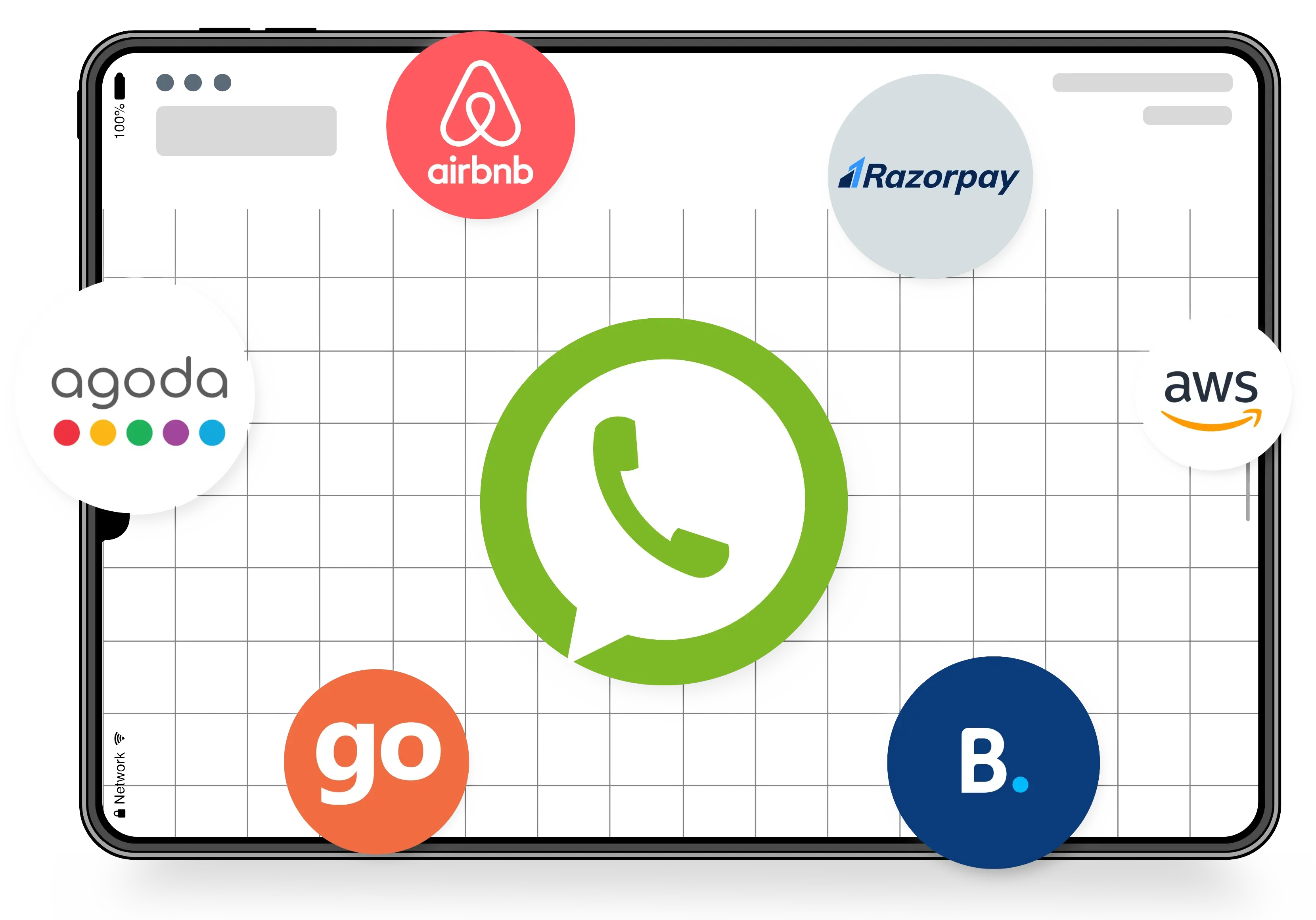
Exceed's channel manager ships with MakeMyTrip, Goibibo, EaseMyTrip, Yatra, Booking.com, Expedia, Agoda and more. Free 14-day trial.
Three Things to Demand of Any Channel Manager
Get these three right and you'll avoid 90% of channel manager problems hotels run into.
.webp)
Two-Way XML/API Connections
Channel manager should push rates/inventory to OTAs AND pull bookings back into PMS automatically. One-way (push only) tools aren't channel managers — they're rate pushers.
Pooled Inventory Model
Pooled is almost always better than dedicated allocation. Maximum yield potential because every OTA sees full available inventory. Allocate-by-OTA limits your upside.
.webp)
Sub-60-Second Sync
Sync lag matters during high-demand sellouts. Test with your actual OTA credentials before signing — any vendor unwilling to demo with real data is hiding something.
2000+
Hotels Across India
80k+
Rooms Managed
99.9%
Uptime Reliability
4.8★
Average Rating
PMS + Channel Manager — Why Integration Matters
When your channel manager is separate from your PMS, booking data has to sync between two systems. Every handoff is a chance for data loss. An integrated platform — PMS and channel manager from the same vendor — eliminates that risk entirely.
Hidden costs of standalone tools. Standalone channel managers charge per property, per channel, or both. Plus you still need a PMS. Plus integration/setup fees. Plus ongoing support from two vendors. Integrated systems are usually 30–50% cheaper on TCO.
Exceed bundles channel manager natively with PMS — see our main hotel management software guide for how the integration works.
Related Reading
Other resources for OTA distribution and direct booking strategy.
Frequently Asked Questions
Common questions about hotel channel managers
-
Do I need a channel manager if I'm only on 2–3 OTAs?
Even with 2–3 OTAs, manual updates create overbooking risk during high-demand periods. A channel manager pays for itself preventing one or two overbookings per year. Above 3 OTAs, it becomes essential.
-
Is pooled inventory safer than dedicated allocation?
For most hotels, pooled is both safer and more profitable — every OTA sees full available inventory, maximizing booking opportunities. Dedicated allocation (specific rooms to specific OTAs) limits your upside without meaningfully reducing risk.
-
How fast should OTA sync be?
Industry-leading channel managers sync in under 60 seconds. Anything above 5 minutes risks overbookings during peak demand. Always test sync speed with your actual OTA credentials before signing.
-
Should I buy channel manager separately from PMS?
Integrated PMS + channel manager from one vendor is almost always cheaper, simpler, and safer. Standalone channel managers introduce sync complexity and dual-vendor support headaches. Buy bundled when starting fresh.
-
Which Indian OTAs does Exceed support?
All major Indian OTAs natively: MakeMyTrip, Goibibo, EaseMyTrip, Yatra, Cleartrip, ixigo. Plus global: Booking.com, Expedia, Agoda, Airbnb, Hotels.com. Start free trial to see them in action.
Have any specific questions? Get in Touch