
Hotel Revenue Management Software — A Beginner's Guide to Dynamic Pricing
Revenue management is the difference between running a 70% occupancy hotel profitably versus breaking even. Done well, it extracts 10–20% more revenue from the same rooms without adding a single guest. Done poorly or not at all, you leave money on the table every single night. This guide explains revenue management software from scratch — what it is, how it fits alongside your PMS, and whether you actually need a standalone RMS.
What Is Hotel Revenue Management?
Revenue management is the practice of selling the right room to the right guest at the right time for the right price. It's a combination of dynamic pricing, demand forecasting, channel mix optimization, and inventory controls working together.
The core metrics: ADR (Average Daily Rate) measures pricing power. Occupancy measures volume. RevPAR (Revenue per Available Room) = ADR × Occupancy — the single most important hotel metric. TRevPAR (Total Revenue per Available Room) includes F&B and other revenue.
Strong revenue management compounds: a 5% RevPAR lift on a ₹50 lakh annual revenue property = ₹2.5 lakh additional profit. Every year. Forever.
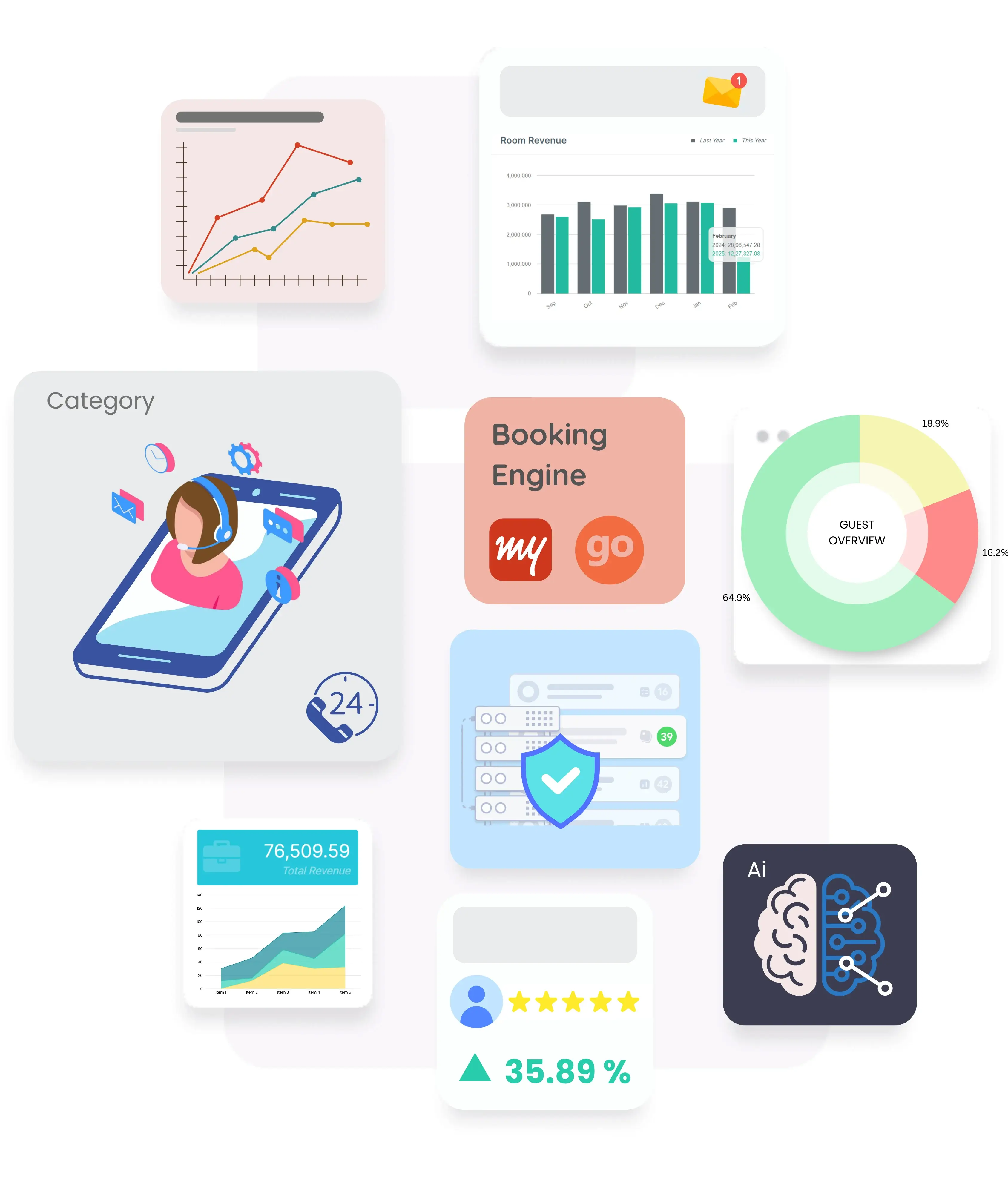
Six Things Revenue Management Software Does
Modern RMS systems automate decisions that used to require dedicated revenue managers.

Demand Forecasting
Uses historical patterns, pace data, market events, and external signals to forecast demand 90–180 days out. AI models 15–25% more accurate than rule-based systems.

Dynamic Pricing
Recommends rates by day and room type based on forecast. High-demand Fridays get premium; low-demand midweeks get discounted.
Competitor Rate Shopping
Automatic monitoring of comp set (your 5–10 closest competitors) — daily rate updates. Lets you price strategically, not reactively.

Length-of-Stay Rules
Min-LOS on weekends prevents 1-night bookings during peak demand. Max-LOS prevents long stays at very low rates. Both protect yield.

Channel Mix Optimization
Allocate inventory and rates differently by channel. Premium rates on direct channels, discounted on lower-margin OTAs.

Reporting & Analytics
Track pace, conversion, ADR by segment, RevPAR vs comp set. Weekly revenue review meetings driven by data.
RMS vs PMS vs Channel Manager — Each Has a Distinct Job
Your PMS (hotel management software) runs property operations — reservations, check-in/out, housekeeping, folio.
Your channel manager keeps rates and inventory synchronized across OTAs.
Your RMS decides what those rates should be.
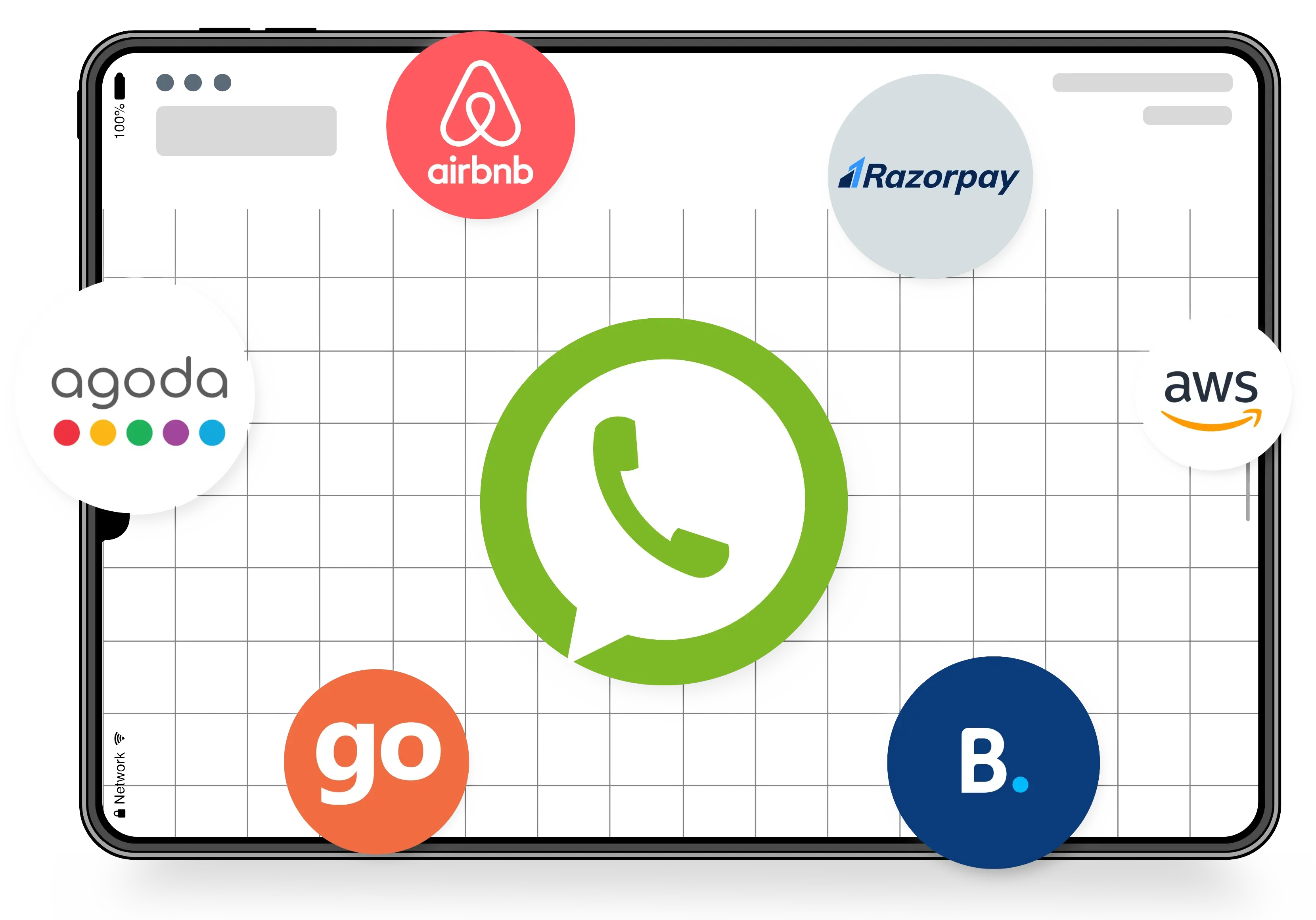
The flow: RMS calculates optimal rates → sends to PMS → PMS pushes to Channel Manager → Channel Manager updates every OTA. If any layer is weak or manual, the whole system breaks down.
See Built-In Dynamic Pricing
For most properties, Exceed's native revenue management features are enough — no separate RMS needed. Free 14-day trial.
Do You Need a Standalone RMS?
Most properties don't. Here's the framework for deciding.
.webp)
PMS Dynamic Pricing Is Enough If...
You have under 100 rooms, 1-2 room types, stable demand patterns, limited competition. Modern PMS dynamic pricing features handle this well — you set rules and the PMS executes.
Consider Standalone RMS If...
You have 150+ rooms, multiple segmentation layers (corporate, leisure, group, OTA, direct), large comp set (10+ competitors), or complex demand patterns (seasonality + weather + events + festivals).
.webp)
Skip RMS Entirely If...
You're a 20-room boutique with stable patterns. Manual revenue management with weekly review meetings will get you 80% of the upside without RMS cost.
2000+
Hotels Across India
80k+
Rooms Managed
99.9%
Uptime Reliability
4.8★
Average Rating
Three RMS Pitfalls Hotels Run Into
Bad data in, bad prices out. An RMS needs 2+ years of clean historical booking data to forecast accurately. Incomplete or inaccurate PMS data produces terrible recommendations. Clean your data first.
Over-reliance on algorithms. Software doesn't know that a cricket World Cup match is happening locally next weekend. A human revenue manager blends RMS output with market intelligence. Full automation without oversight is dangerous.
Staff adoption challenges. Front desk staff often question RMS-recommended rates ('That's too high! The guest will walk!'). Training on the reasoning behind dynamic pricing is essential for adoption.
Related Reading
More resources for revenue and pricing strategy.
Frequently Asked Questions
Common questions about hotel revenue management software
-
Do I need a separate RMS or can my PMS handle revenue management?
For properties under 100 rooms with stable demand patterns, modern PMS dynamic pricing features are sufficient. Above 150 rooms with complex segmentation, a standalone RMS often pays for itself. Between those sizes, it depends on your competitive intensity and pricing complexity.
-
What RevPAR uplift can I expect from revenue management?
Hotels implementing dedicated revenue management (software + process) typically see 4–12% RevPAR uplift within 12 months. A 100-room property at ₹5,000 ADR at 70% occupancy with 8% RevPAR lift = ~₹1 crore additional annual revenue.
-
How long does RMS implementation take?
Standalone RMS systems need 2–4 weeks to configure plus 60–90 days for the AI models to calibrate against your historical data. PMS-integrated dynamic pricing is usable from day one.
-
What's the difference between ADR and RevPAR?
ADR (Average Daily Rate) = Total room revenue / rooms sold — measures pricing power. RevPAR (Revenue per Available Room) = ADR × Occupancy — measures total room revenue performance. RevPAR is the more important metric because it accounts for both pricing and volume.
-
Does Exceed include revenue management features?
Yes — Exceed includes dynamic pricing rules, season-based rate plans, length-of-stay restrictions, channel-specific pricing, and pace reports. For most properties, this delivers 80% of standalone RMS value at no additional cost. Start free trial.
Have any specific questions? Get in Touch